
Outdoor skills, adult supervision
How to use a bow or hand drill
A bow drill uses a bent stick, cord, and spindle to spin wood quickly against a fireboard. A hand drill uses palms alone to spin a spindle—slower for many learners, but the same idea. For most of human history, friction kits like these were a practical way to make fire when other tools did not exist. The headline rule never changes: practice only outdoors, in a controlled spot, with an adult who is ready to supervise and extinguish sparks.
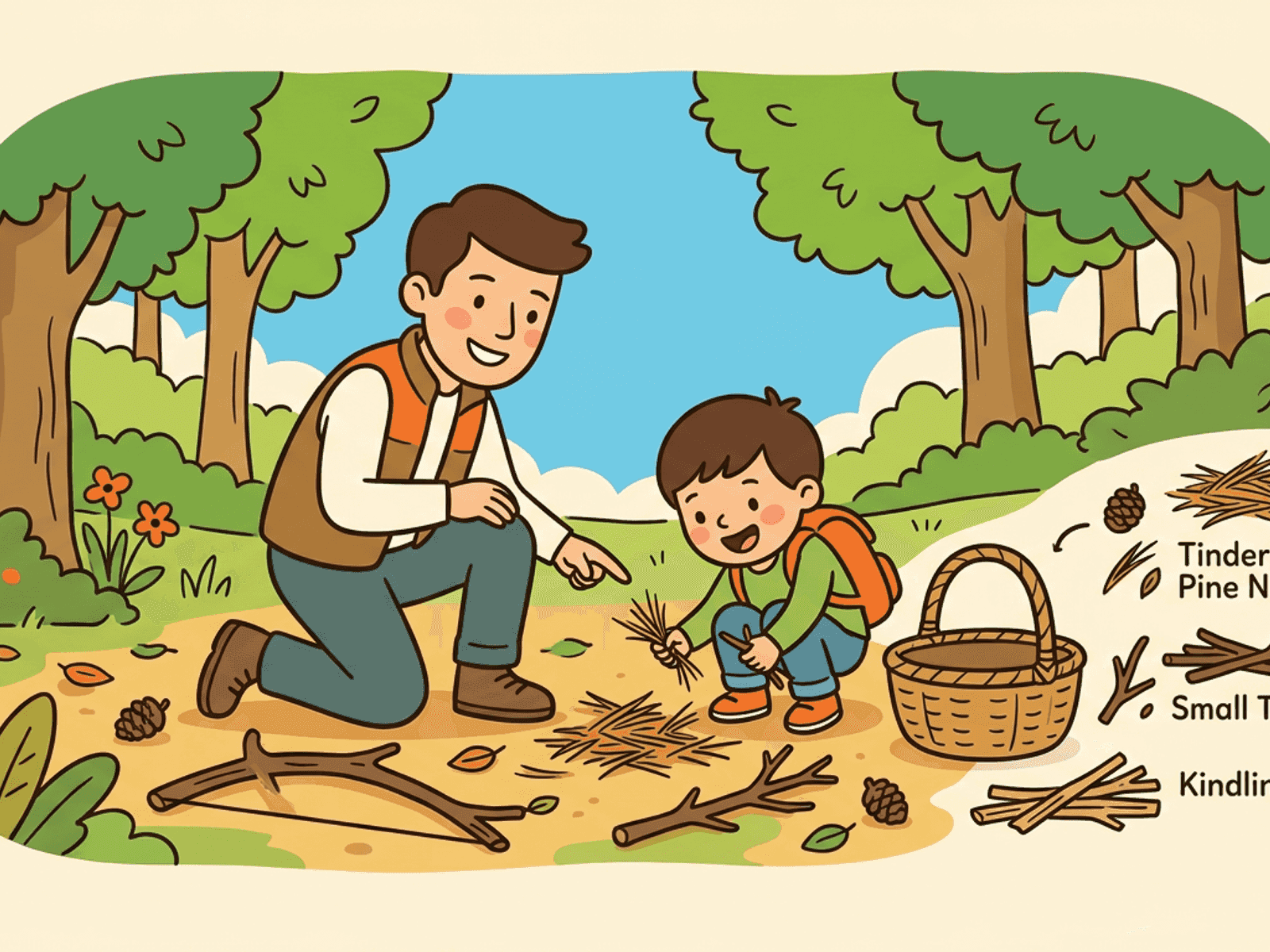

What you need
- Dry Tinder (fine, fluffy fuel that lights from a small heat source)
- Kindling (finger-thick dry pieces for the next stage)
- A flat Fireboard (hearth board) carved with a notch for dust
- A straight Spindle that matches the fireboard wood
- A short bow, strong cord, and a bearing block or shoe to hold the spindle steady at the top
- Water or another way to smother sparks, plus a cleared outdoor area away from dry brush
Steps in order
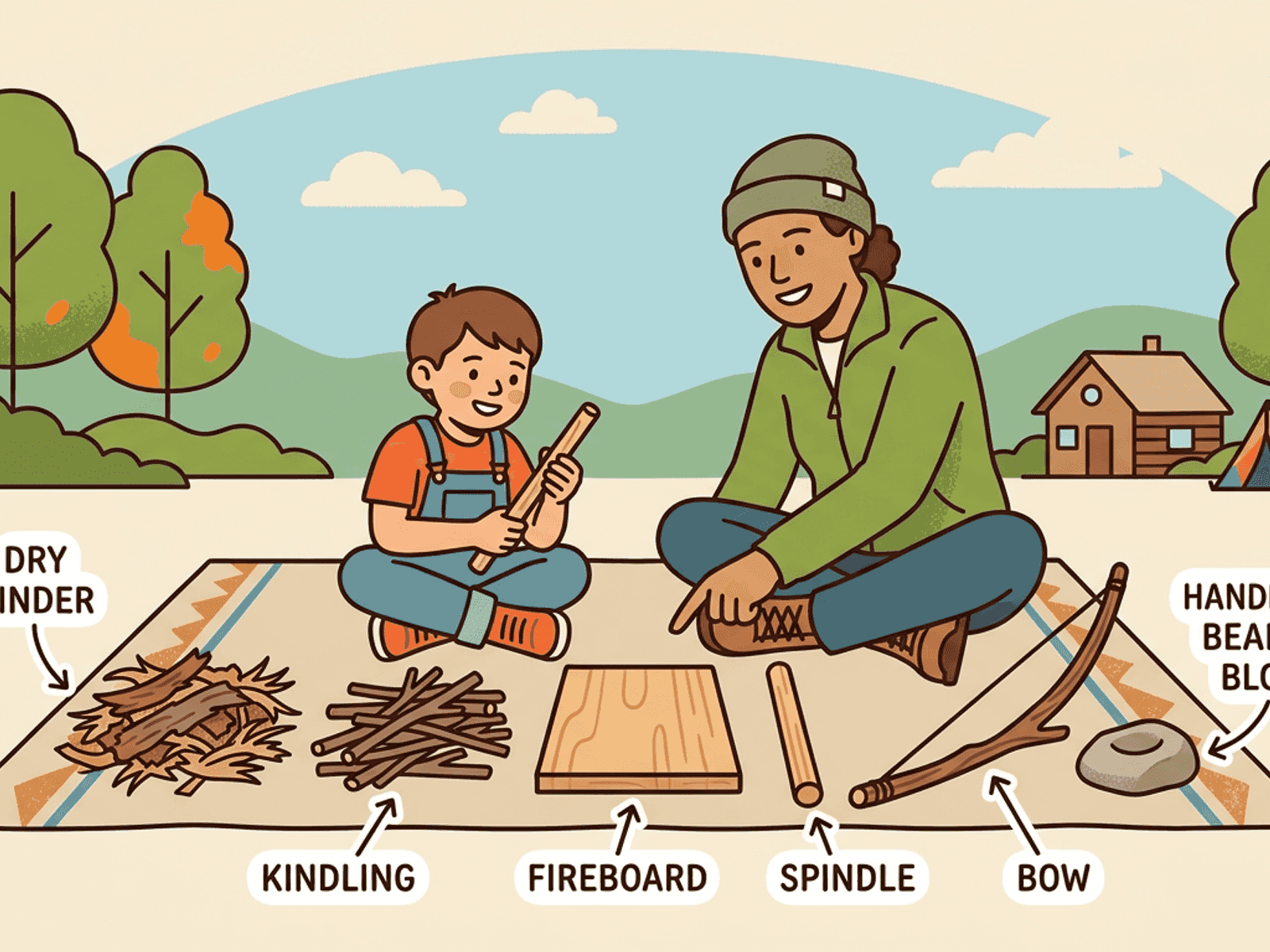
Gather dry tinder, kindling, and tools
Line up dry tinder, kindling, the fireboard, spindle, and bow in one place. Choose level ground, clear away leaves and grass, and keep a water bottle or dirt pile nearby so sparks can be cooled or smothered quickly. The adult sets the boundary of the practice area.
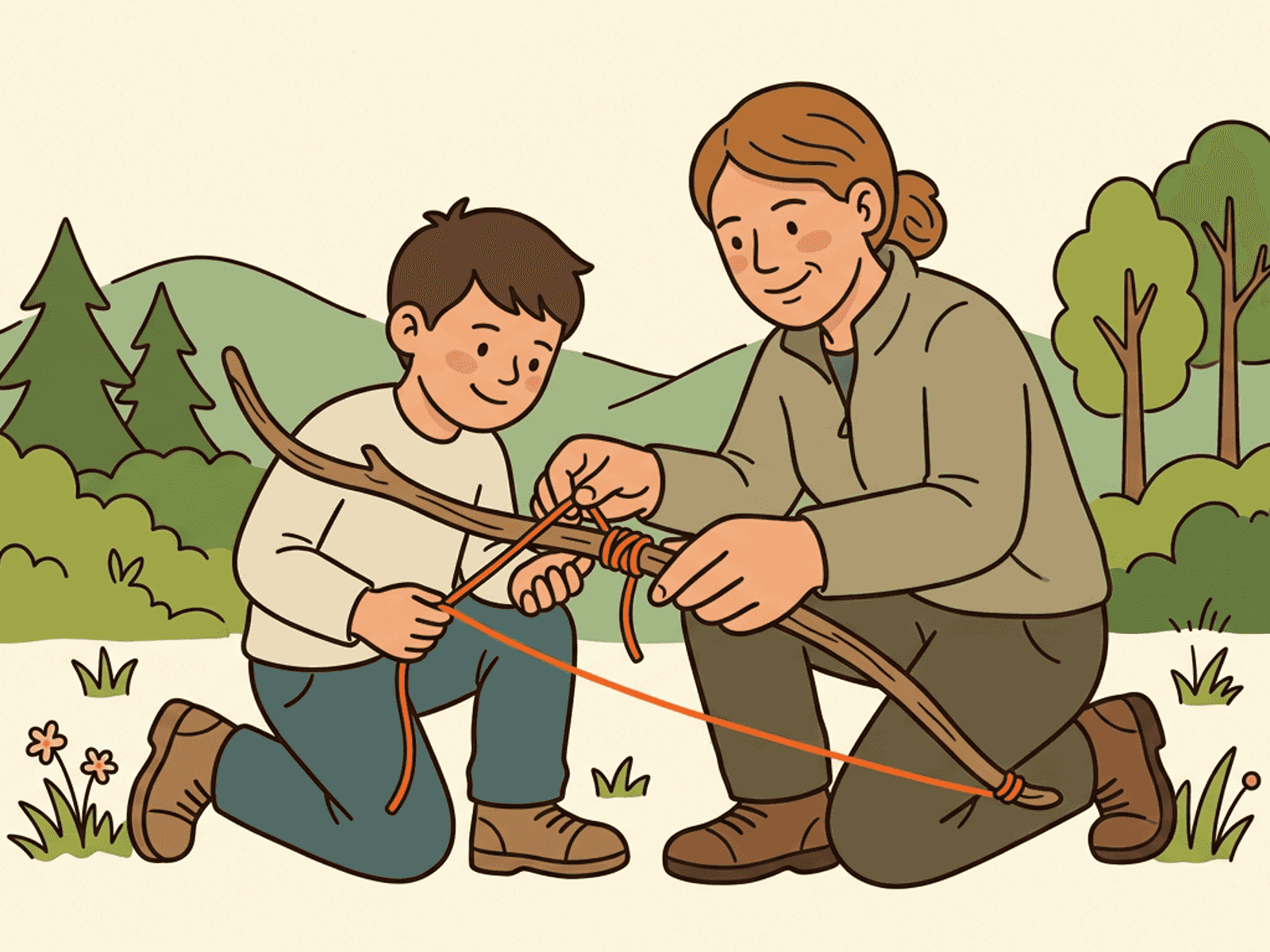
Tie a bow and string it correctly
The bow is a slightly curved stick with a fixed cord length. When the cord wraps once around the spindle, it should bite enough to spin the shaft without so much tension that the stroke stalls. Small adjustments matter more than force.
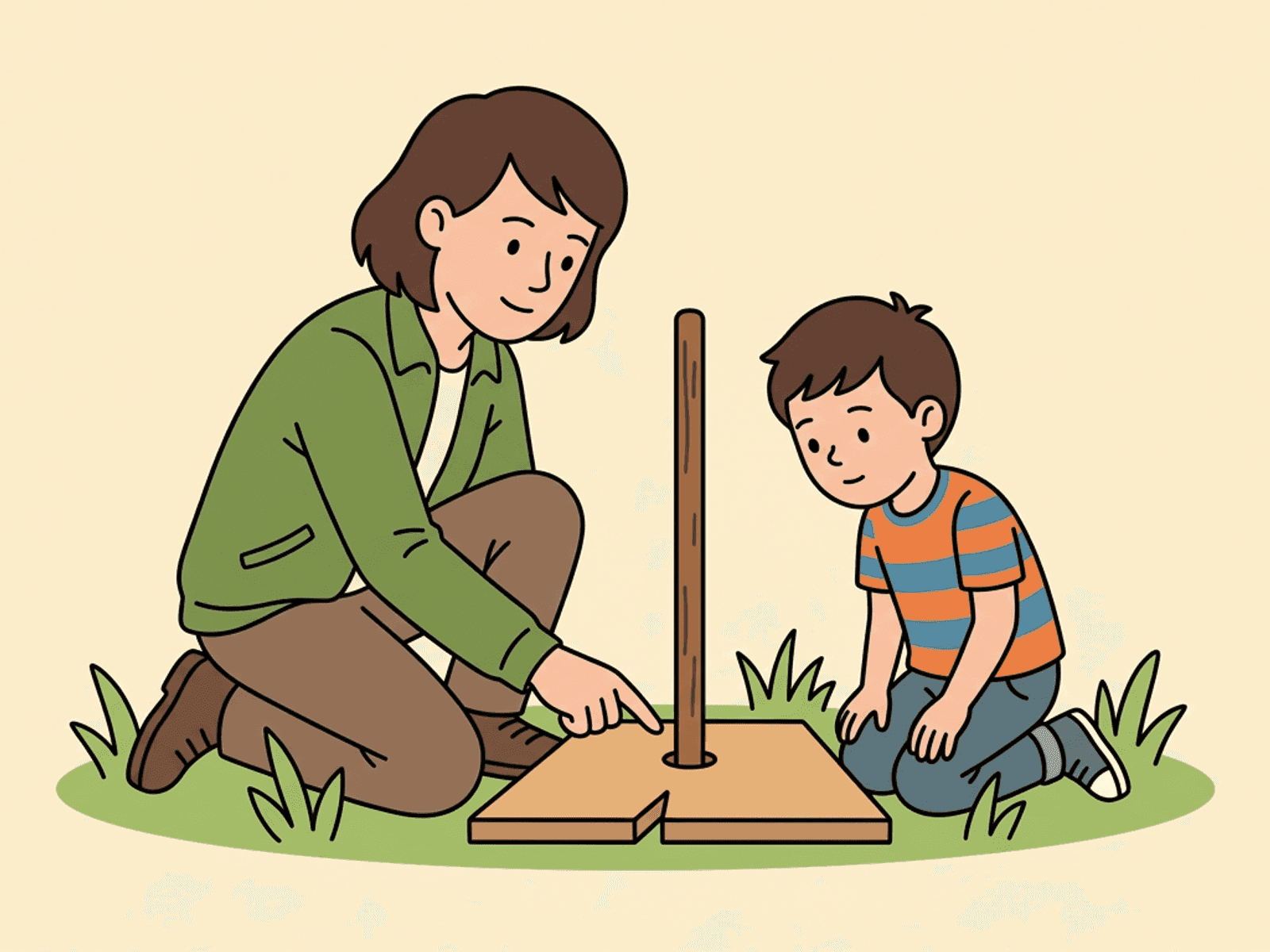
Cut the notch, seat the spindle, and brace the board
The fireboard holds a shallow socket for the spindle tip and a V-shaped notch that lets char dust fall into a single pile. A bearing block (sometimes called a handhold or shoe) presses down on the top of the spindle while the bow drives rotation. A steady board is safer than a wobbling one.
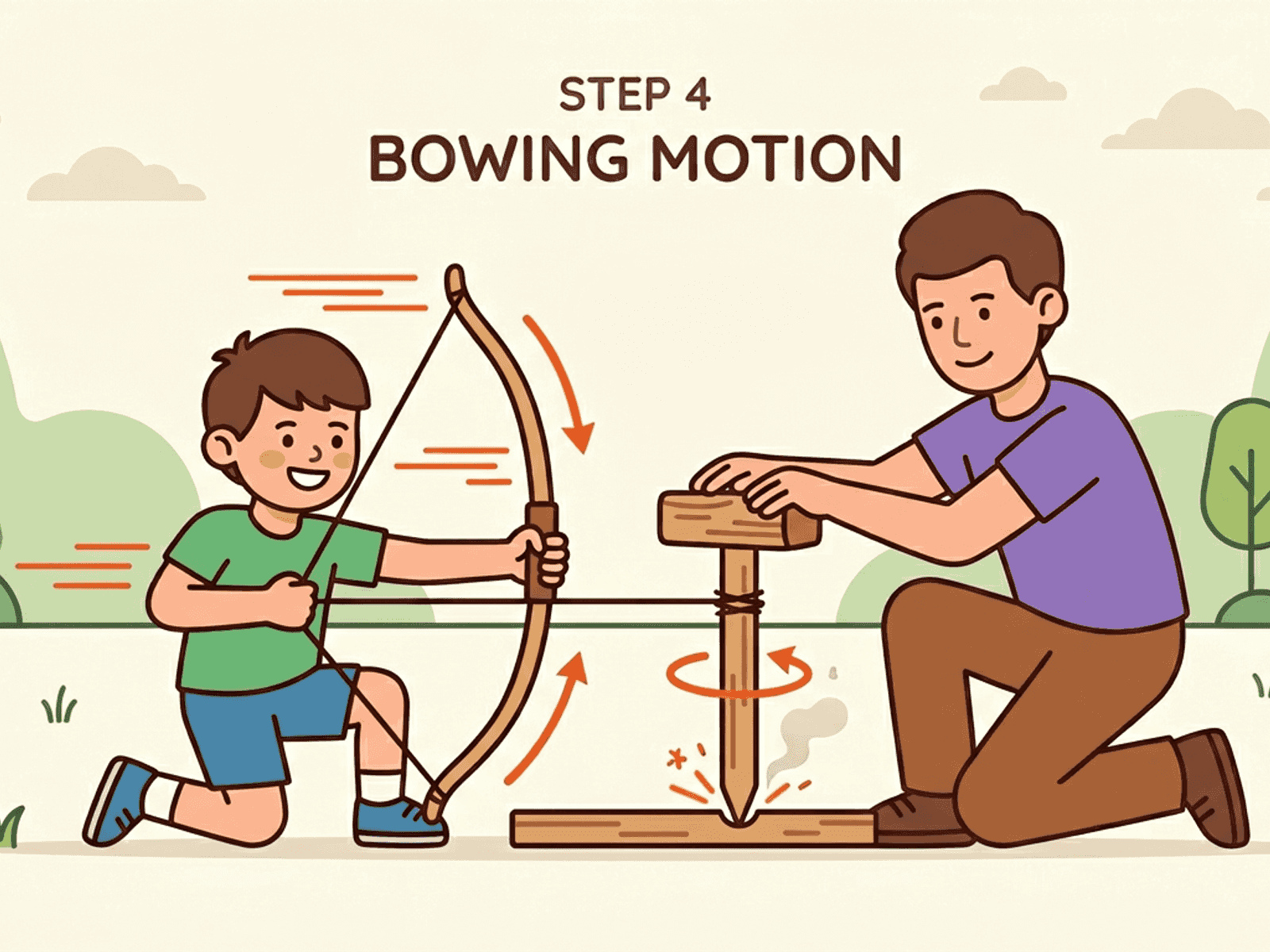
Use smooth bow strokes with steady downward pressure
The bow arm moves back and forth like a long saw stroke; the other hand locks the bearing block over the spindle. Consistent speed keeps Friction generating heat instead of bouncing the kit apart. Expect fatigue—short breaks are normal.
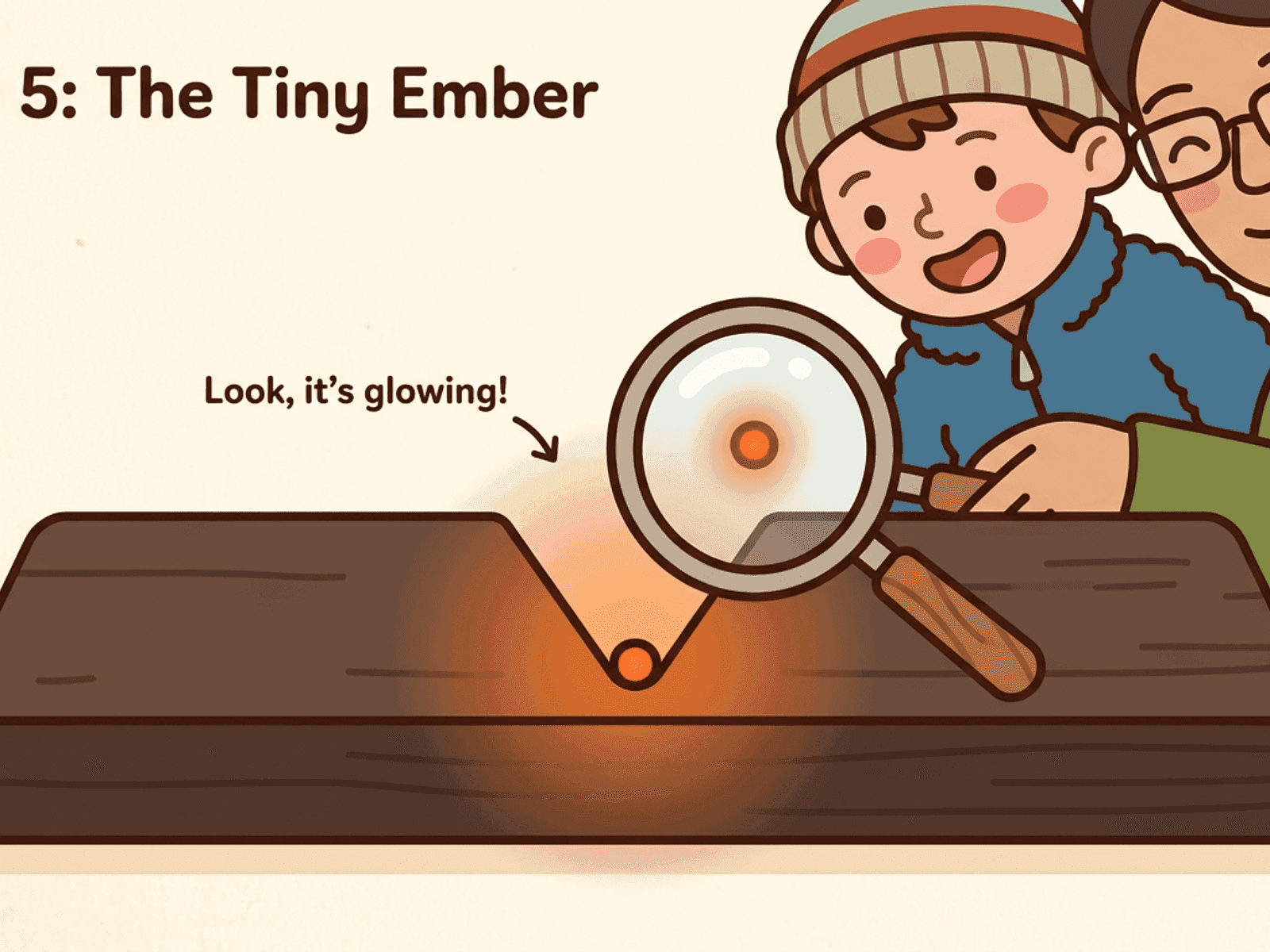
Look for a coal, not a theatrical spark
When the wood powder reaches its Ignition temperature , a tiny Ember glows in the notch. It may look like a faint orange dot rather than a flame. Let it grow until the adult agrees it is stable before touching the nest.
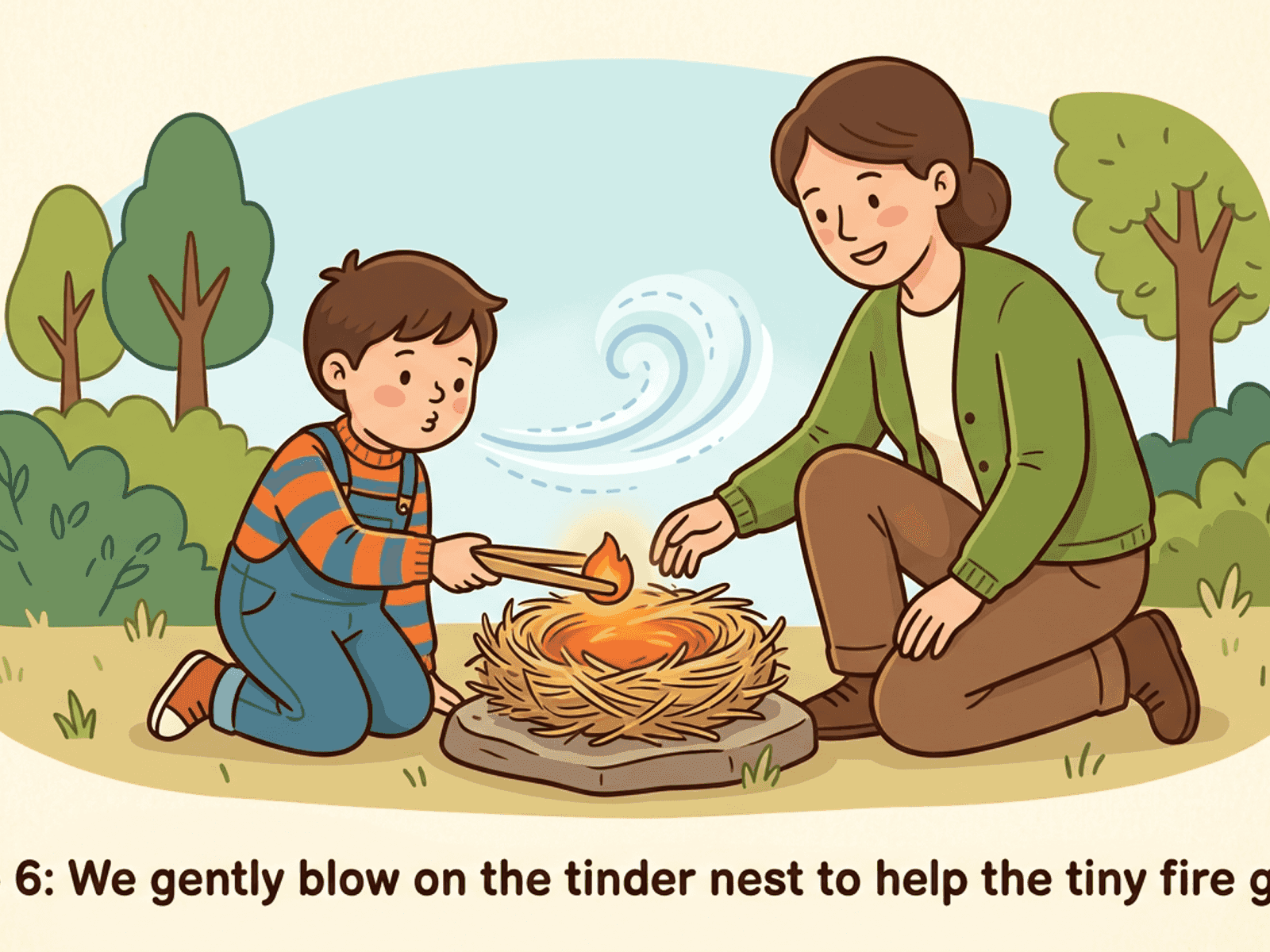
Move the ember into tinder and add air carefully
Slide the glowing dust into a dry bird’s-nest of Tinder , cup it loosely so oxygen can move, and add breaths only as demonstrated—never toward anyone’s face, never in a rush. If anything jumps outside the pan or pit, the adult uses the plan you agreed on before starting.
What we do not do
- Do not practice indoors, in a vehicle, on a balcony, or anywhere an adult has not approved.
- Do not use damp materials, work in high wind, or stand near brittle dry grass without a wider safety margin.
- Do not aim smoke, blowing, or flying sparks toward people, pets, or neighbors.
- Do not treat fire skills as pranks, bets, or social-media stunts—respect for heat matters more than speed.
Learn more
These links open in a new browser tab so you can keep reading here.
- Campfires and campfire safety (opens in a new tab) — National Park Service
- Fire making (opens in a new tab) — Wikipedia
- Bow drill (opens in a new tab) — Wikipedia