
People and fire
A very old skill
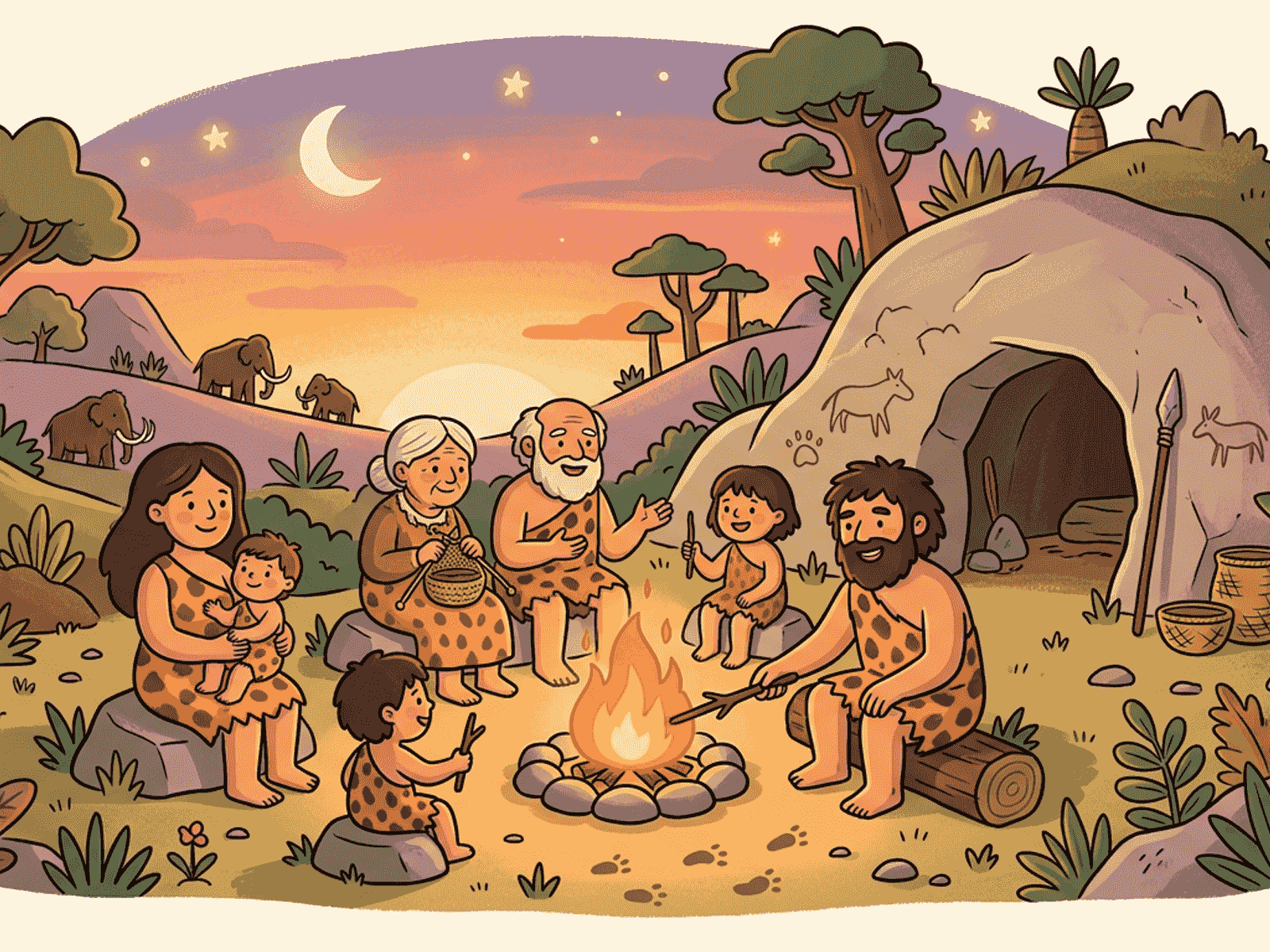
Archaeology points to ancient hearths and burned bone: people have been living with controlled fire for hundreds of thousands of years. That partnership shaped cooking, warmth, toolmaking, and the social rhythm of gathering around light after dark.

Part 1
Earliest camp centers
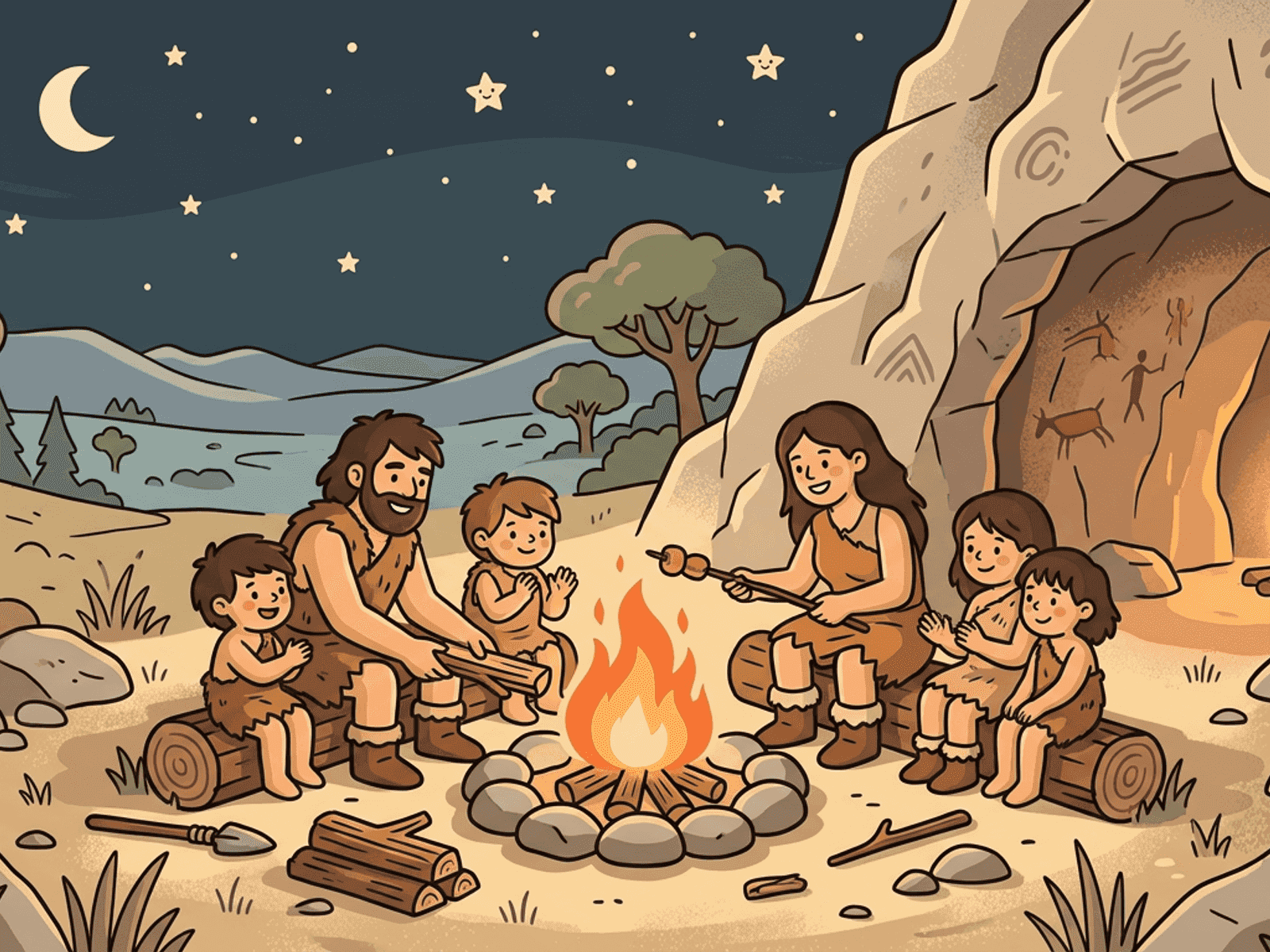
Early controlled fires extended daylight, discouraged some predators, and gave groups a predictable place to return. Archaeologists read that story in ancient ash layers and stone hearths. Modern learners mirror the caution: a fixed camp circle, clear ground, and leaders who set boundaries.
Part 2
Cooking with heat on purpose
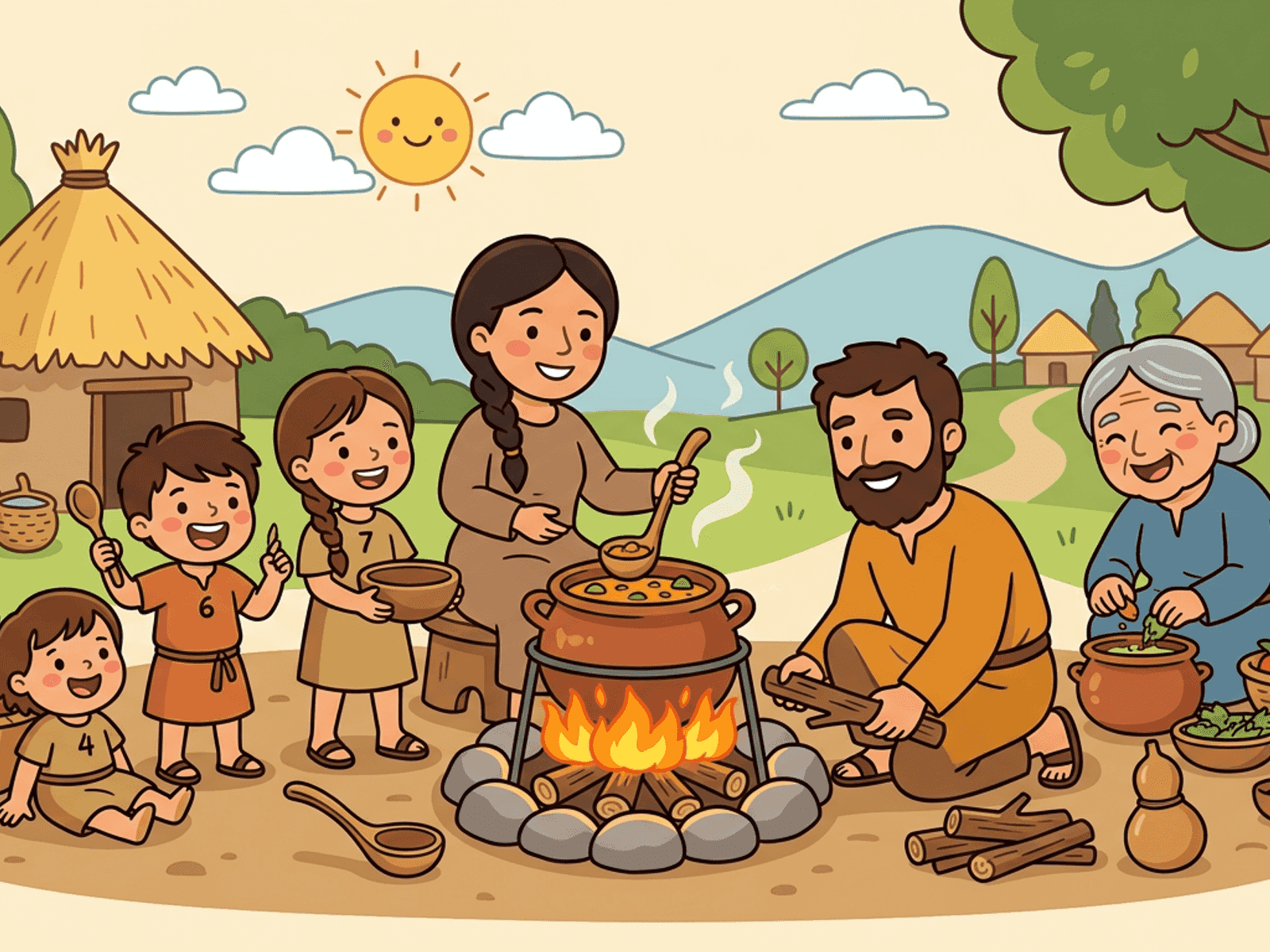
Heat from coals turned raw ingredients into safer, softer meals and unlocked new flavors. Clay pots and griddles arrived later, but the basic idea—moving food through temperature zones on purpose—starts with understanding embers. Today’s lesson is unchanged: only adults reposition cookware or adjust fuel.
Part 3
Hearths as household hearts
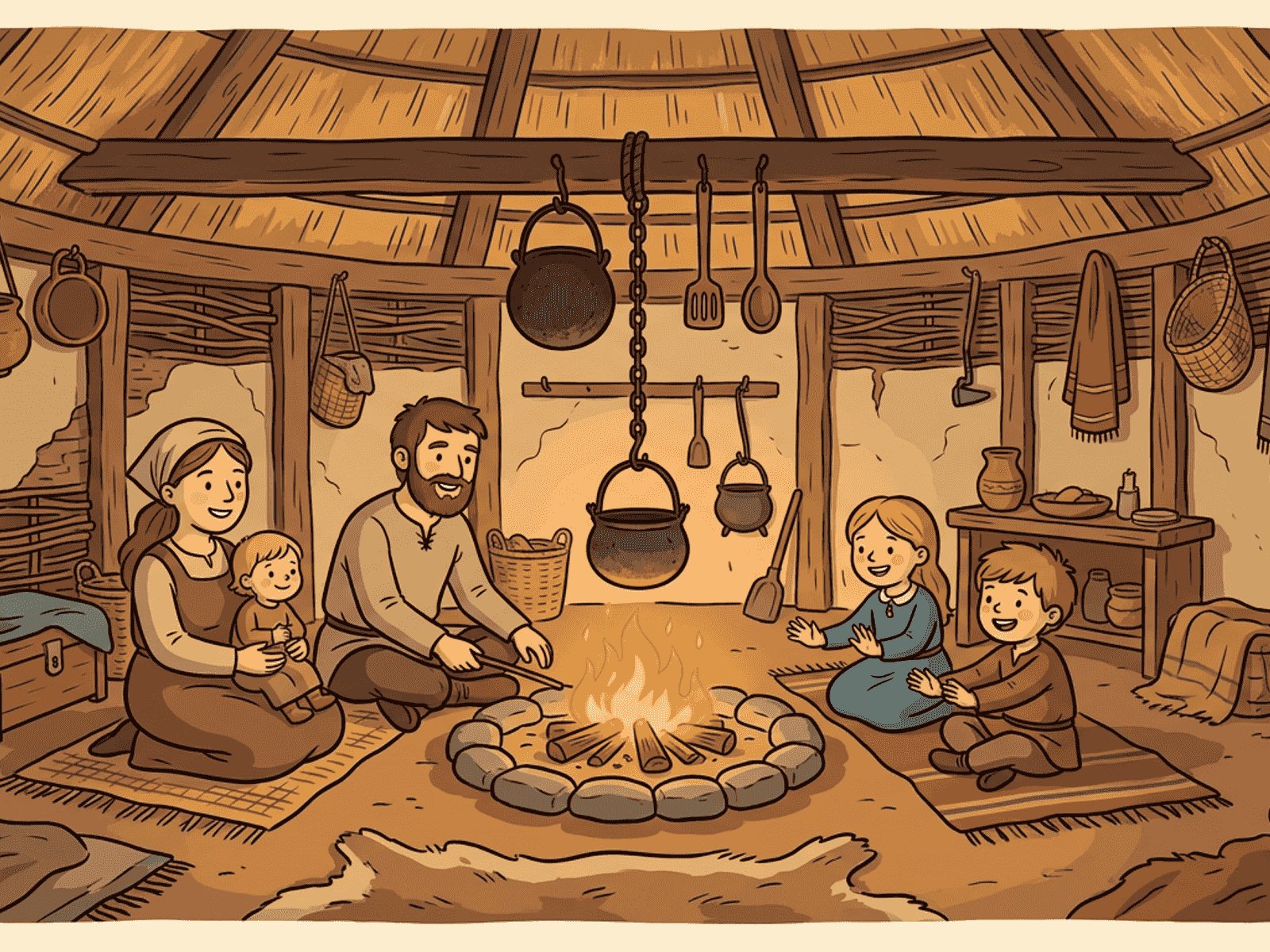
A hearth anchors a home or workshop: a shelf for drying clothes, a bench for repair work, a steady radiator in cold seasons. The word hearth still signals the moral center of a household. Any indoor fire in the modern world follows building codes and tools that friction learners are not asked to improvise.
Part 4
Circles of light and language
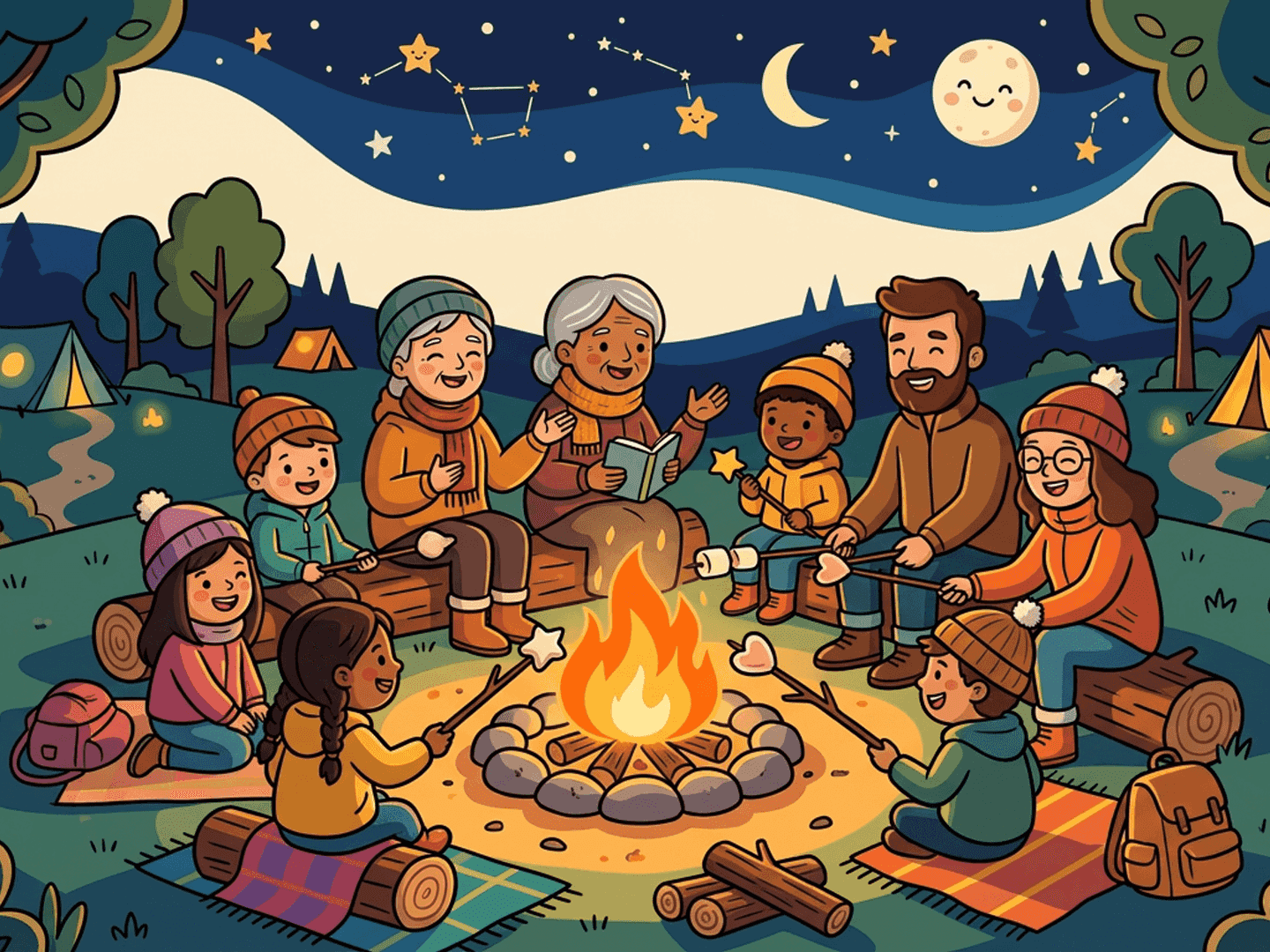
Firelight invites stories, songs, and planning for tomorrow. Oral traditions often assume listeners can linger without straining their eyes. Respectful voices, shared snacks, and a clear “time to bank the coals” ritual keep the mood safe. The ember is small; the community habits around it are large.
Fire around the world
Different landscapes offered different woods, fibers, and social rules, yet many cultures independently refined bow drills, hand drills, or fire plows suited to their forests and grasslands. Traders and travelers later swapped details across continents, but the through-line is steady: friction fire is a craft tuned to local materials, not a single patented gadget. Museums and anthropology essays often pair those tool traditions with the deep-time story of Hearth sites—helpful reading after you finish the how-to steps.
Why the history still matters
Understanding fire’s role in food, warmth, and cooperation explains why modern safety culture treats sparks seriously. The skills are ancient; the dry grass beside a trail is just as quick to react today. Keeping that perspective makes practice humble, careful, and worth repeating only with prepared adults.
Learn more
These links open in a new browser tab so you can keep reading here.
- Control of fire by early humans (opens in a new tab) — Wikipedia
- History of fire (opens in a new tab) — Wikipedia
- Hearth (opens in a new tab) — Wikipedia