
Reference guide
About this site
Plain-language explanations of friction fire-starting, paired with careful safety framing and links to established references.
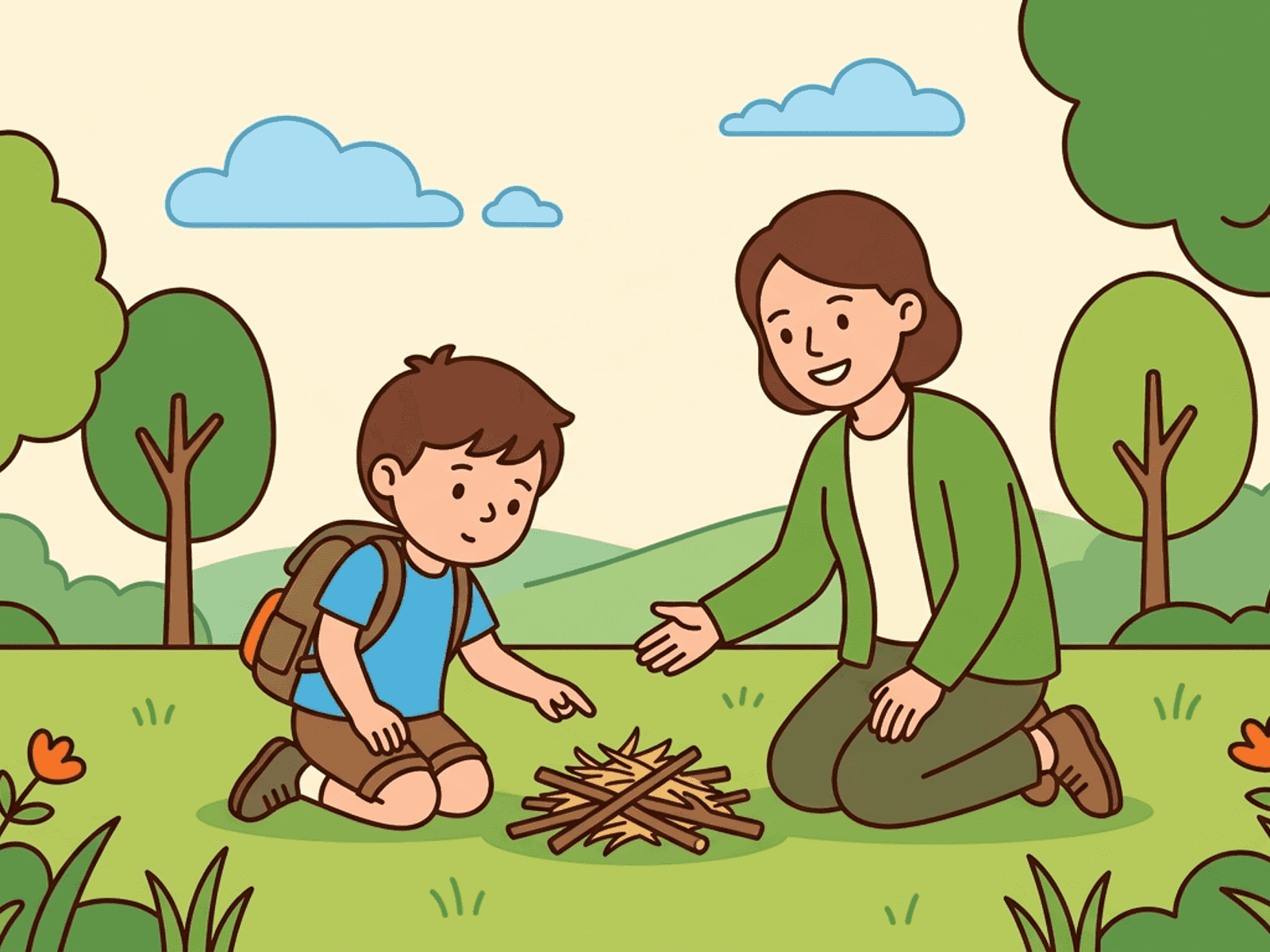

What this site is
This is a short, illustrated reference about starting fire with sticks—chiefly bow drills and hand drills—for readers who want accurate vocabulary, a respectful history note, and step-by-step context before trying anything outdoors. It is designed to read like a friendly encyclopedia article: calm sentences, real terms, and no pressure to perform tricks on camera.
Who it is for
Families reading together, teachers building a nature or STEM unit, scout mentors, curious kids who already ask “how does that work?”, and anyone searching for a trustworthy overview of humanity’s oldest heat-making toolkit. Younger readers benefit most when an adult narrates the steps aloud and pauses for questions.
Safety first, always
Friction fire belongs outside in a cleared, controlled area with a prepared adult who can say when to stop. Conditions should not be dangerously dry or windy for your location, and a water source or smothering material must be within reach before the spindle moves. The yellow safety banner at the top of each topic repeats that message; start with the How to page for the full “what we do not do” list before any kit leaves the supply bin.
How we wrote this
Sentences stay short, verbs stay concrete, and technical words link to the glossary the first time they appear on a page. Claims about history and science aim to match widely available references; the “Learn more” lists point to museums, agencies, and encyclopedia articles so families can go deeper. Nothing here replaces local laws, land-manager rules, or instruction from qualified outdoor educators.
Further reading
These links open in a new browser tab so you can keep reading here.
- Campfires and campfire safety (opens in a new tab) — National Park Service
- Fire making (opens in a new tab) — Wikipedia
- Control of fire by early humans (opens in a new tab) — Wikipedia
- Fire safety for kids (opens in a new tab) — KidsHealth (Nemours)
- Home fires (opens in a new tab) — Ready.gov
- Wildland fire management (opens in a new tab) — U.S. Forest Service